


Table of Contents
ToggleThe inventory reconciliation process earns its place on someone’s calendar the day a $40,000 shipment goes missing on paper. The warehouse team swears it left last Tuesday. The accounting system still shows it sitting in stock. Somewhere between those two records is the truth, and finding it is the entire job.
Nobody reconciles inventory because they enjoy it. They do it because the alternative costs real money the first time it happens and keeps costing money every time after: an invoice raised against stock that isn’t there, a reorder placed for stock that has already been sold, a bank asking why the balance sheet and the warehouse tell two different stories.
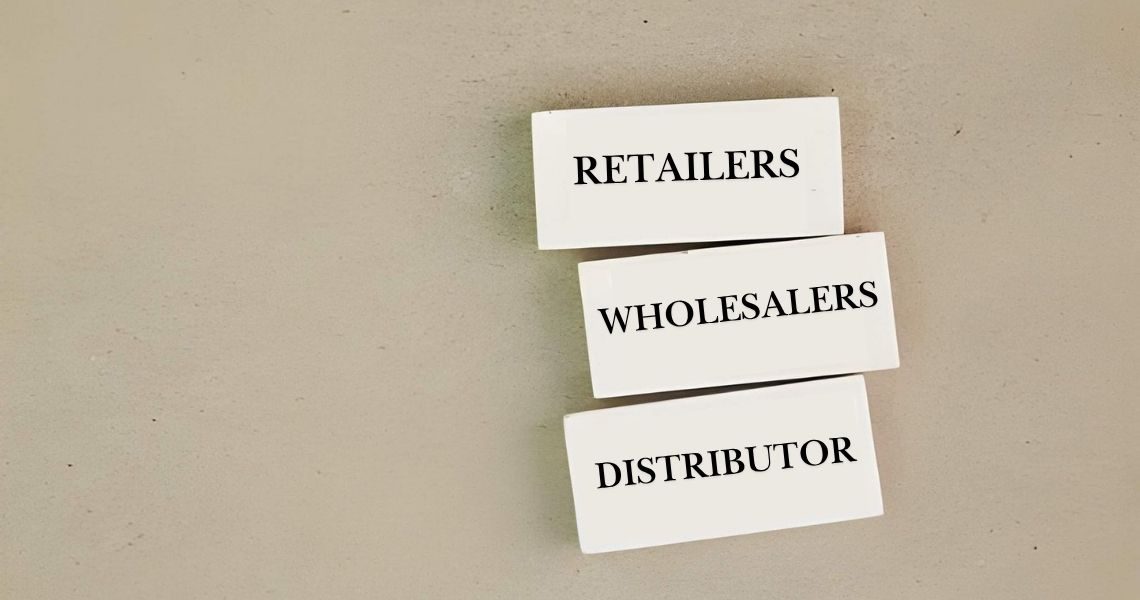
For retailers, wholesalers, and distributors, that gap shows up in different places and at different scales. Underneath all three, it’s the same question: can you actually trust the number on the screen, or are you one physical count away from finding out you can’t?
What Inventory Reconciliation Process Is Actually Checks
A retailer, a wholesaler, and a distributor are all chasing the same match, but the point where it breaks down differs by how each business actually moves product.

Retail’s Match Happens at the Register: Every scan, return, and discount either updates the point-of-sale record correctly or doesn’t. A gift card redeemed twice, a return restocked without a system entry, an item that leaves unpaid: each is a one-unit gap, but they compound fast at high transaction volume.
Wholesale’s Match Happens at the Pallet: When quantities are tracked in cases or pallets across two or three warehouses, one miscount doesn’t cost one unit. A wholesaler’s inventory reconciliation process has to catch that at the pallet level, or it can cost hundreds sitting in the wrong bin or the wrong location entirely.
Distribution Adds a Third Variable That Retail and Wholesale Don’t Deal With: Stock that isn’t legally yours yet. Consignment inventory belongs to the vendor until it is sold. A distributor’s inventory reconciliation process has to keep that stock separate, or it usually finds out during a vendor audit that it’s been treating someone else’s asset as its own.
What a Reconciliation Gap Really Costs
Two documented data points show why a weak inventory reconciliation process isn’t a rounding error: one from retail, one from wholesale and distribution.

On the retail side, the National Retail Security Survey found that US retailers lost an average of 1.6% of sales to shrink in fiscal year 2022, up from 1.4% the year before, an estimated $112.1 billion industry-wide. That figure covers all shrink causes (theft, damage, and administrative error together), not inventory reconciliation variance specifically, so it’s a useful scale reference rather than a direct measurement of reconciliation gaps.
On the wholesale side, the Wholesale Trade Report put the inventories-to-sales ratio for merchant wholesalers at 1.21 in March 2026, down from 1.30 a year earlier. A business whose own ratio is climbing against that national trend often isn’t over-buying. It’s frequently a sign that its inventory reconciliation process hasn’t kept pace, carrying stock nobody has properly counted in a while, which inflates the balance sheet without inflating what’s actually sellable.
To make the scale concrete with simple, hypothetical math rather than a cited benchmark: a distributor carrying $10 million in annual cost of goods sold, and a 1% unreconciled variance, a modest and entirely made-up rate for illustration only, is looking at $100,000 in inventory the books say exists that the warehouse can’t produce.That’s not a finding from either source above. It’s just what a small percentage looks like once it’s applied to a real-sized number, and it’s the kind of gap a working inventory reconciliation process is built to catch before it reaches that scale.
Cycle Counts vs. Periodic Counts: Choosing Your Method
Most growing businesses need both methods, applied to different parts of the catalog, rather than picking one as a blanket policy.
| Method | How it works | Best fit |
|---|---|---|
| Periodic count | Full stock count on a set schedule, usually monthly or quarterly | Lower SKU counts, single-location operations |
| Cycle counting | A rotating subset of SKUs is counted continuously across the year | High SKU counts, multiple warehouses, fast-moving stock |
A workable rule of thumb: run cycle counts on your top 20% of SKUs by revenue, the ones a stockout or overcount would actually hurt, and let periodic counts cover everything else. That split resolves most of the “which method” debate without turning it into a company-wide policy fight.
Three Questions to Ask Before You Write Off a Variance
Not every discrepancy in the inventory reconciliation process deserves the same response, and treating a $40 miscount the same way as a $4,000 one wastes time on one end and risks compliance exposure on the other.

Under US GAAP, entities that don’t use LIFO or the retail inventory method must measure inventory at the lower of cost and net realizable value under ASC 330, and that valuation starts from a reconciled count. A small variance on a low-value item can reasonably be written off. The same variance on a high-value SKU changes the reported gross margin enough that it deserves an actual answer.
A single miscount is normal. The same bin, SKU, or shift showing a discrepancy every cycle isn’t bad luck. It’s a process failure somewhere in receiving, picking, or how transfers get logged.
COGS, for readers newer to the term, is simply the direct cost of the goods you sold in a given period. Get the valuation method wrong and every number downstream- gross margin, tax liability, pricing- inherits that error. Per IRS Publication 538, once you adopt a method, you have to stick with it consistently, and changing later means filing Form 3115 with the IRS. Worth getting right the first time.
A Six-Step Inventory Reconciliation Process Cycle That Doesn't Eat Your Week
Businesses that reconcile inventory well aren’t working harder than everyone else. They’re running the same sequence on a schedule instead of reinventing it under pressure at month-end.

- Pull the system count for the SKUs or locations in scope.
- Count physically cycle counts for your high-value rotation and full counts for everything else.
- Flag anything past your tolerance, set by SKU value, not as one flat number across the whole catalog.
- Trace it before you adjust it. Most variances trace back to an unlogged return, a transfer coded to the wrong location, or a shipment that left before the system caught up.
- Post the correction with a reason attached, not just a revised quantity.
- Review the trend monthly. One variance is a data point. A repeat variance on the same SKU is a signal.
Final Thoughts
Every distinction in this piece collapses back to one habit: closing the gap between when a discrepancy happens and when someone notices it. A retailer’s register error, a wholesaler’s miscounted pallet, and a distributor’s consignment mix-up are different problems on the surface, but all three get expensive for the same reason: they sit unresolved long enough to compound. The six-step inventory reconciliation process above isn’t about working harder at month-end. It’s about making that detection gap small enough that a $40 miscount stays a $40 miscount instead of becoming a pattern nobody can explain by year-end.
Get the counting cadence and the tolerance thresholds right, and the GAAP valuation, the audit trail, and the gross margin conversation mostly take care of themselves, because they’re all downstream of the same reconciled number. That’s the real payoff here: not a cleaner spreadsheet, but a set of financials everyone in the business, including a bank or an auditor, can actually trust without a caveat.
VNC Global works with US retailers, wholesalers, and distributors to build cycle counting and reconciliation processes that keep books and warehouse counts in agreement year-round. Our inventory accounting work is built around exactly this gap, and our bookkeeping services connect it directly to your monthly close.
Visit vncglobalgroup.com and book a free 30-minute advisory call to see where your process holds up and where it’s leaking margin nobody’s tracking yet.
Frequently Asked Questions
It’s the process of comparing what your system records against what a physical count confirms, then tracing and correcting the gap. It’s less about the count itself and more about what the pattern of gaps over time tells you.
Rank your catalog by revenue contribution and put your top 20% on a rotating cycle count schedule. The remaining 80% usually doesn’t move fast enough or carry enough value to justify the same frequency.
Set the threshold by dollar impact, not unit count. A 10-unit variance on a $2 item and the same variance on a $400 item aren’t the same problem, so a flat unit-based tolerance usually means chasing the wrong discrepancies.
Small, one-off adjustments are fine going straight to cost of goods sold. Recurring or large variances are better tracked through a dedicated variance account within your inventory reconciliation process, since burying repeat discrepancies inside COGS hides the pattern a controller needs to see.
Consignment stock belongs to the vendor until it is sold, so it needs its own count and its own line on the balance sheet, separate from owned inventory. Treating the two as one pool is a common mistake among distributors, and it usually surfaces during a vendor audit.
Start with your top 20% of SKUs by revenue and count that group every two weeks for a full quarter before expanding further. Trying to build a full cycle counting program across the entire catalog on day one is the most common reason these initiatives stall.
Track two things over a quarter: whether variances are shrinking and whether the same SKUs keep reappearing. A working process shows both trending down. If the same items show up every cycle with a fresh explanation each time, it’s documenting a problem instead of fixing it.