



Table of Contents
TogglePreparing for Black Friday with the right inventory management system is the work that decides whether November 27 pays your bills or quietly runs up new ones. The rush happens on the day. The damage tends to surface weeks later, when someone in finance tries to reconcile what the warehouse shipped, what Shopify sold, what Amazon paid out, and what Xero or QuickBooks says you earned.
That January moment is where a messy peak season sends its bill. A best seller oversold by 200 units turns into cancelled orders, refunds, and one-star reviews. A slow mover you over-ordered in September becomes cash sitting on a pallet until spring. A cost price nobody updated means you may have discounted a product below what it cost you to land it.
The stakes are higher this year. Adobe forecasts US shoppers will spend $275.1 billion online between November 1 and December 31, 2026, with Cyber Monday alone expected to pass $15 billion. If you run a $5M to $100M distribution, wholesale, or manufacturing business, this guide shows what preparing for Black Friday with the right inventory management system really involves, from costly mistakes to reorder math and a 30-day countdown.
Why Preparing for Black Friday With the Right Inventory Management System Matters
Peak season keeps getting bigger, earlier, and faster. A peak-ready system gives your team one version of the truth before the volume arrives.

Adobe expects Cyber Week, the five days from Thanksgiving to Cyber Monday, to bring in $47.5 billion in US online spending, with Black Friday growing faster than usual because discounts are starting earlier. Deep discounts bring volume, and volume exposes every weak link in your stock data.
Speed matters too. Over Black Friday Cyber Monday 2025, Shopify merchants recorded $14.6 billion in sales, peaking at $5.1 million per minute. At that pace, a stock figure that refreshes every few hours is already wrong. Real-time inventory tracking lets a $10M business handle the same rush without overselling.
The US Census Bureau reports that e-commerce made up 17.1% of total US retail sales in the second quarter of 2026. More orders from more places at once is exactly where preparing for Black Friday with the right inventory management system pays for itself.
The Five Costly Mistakes That Surface After the Sale Ends
The mistakes that hurt most rarely look dramatic on Black Friday. They show up later as refunds, write-offs, and margins that refuse to add up.
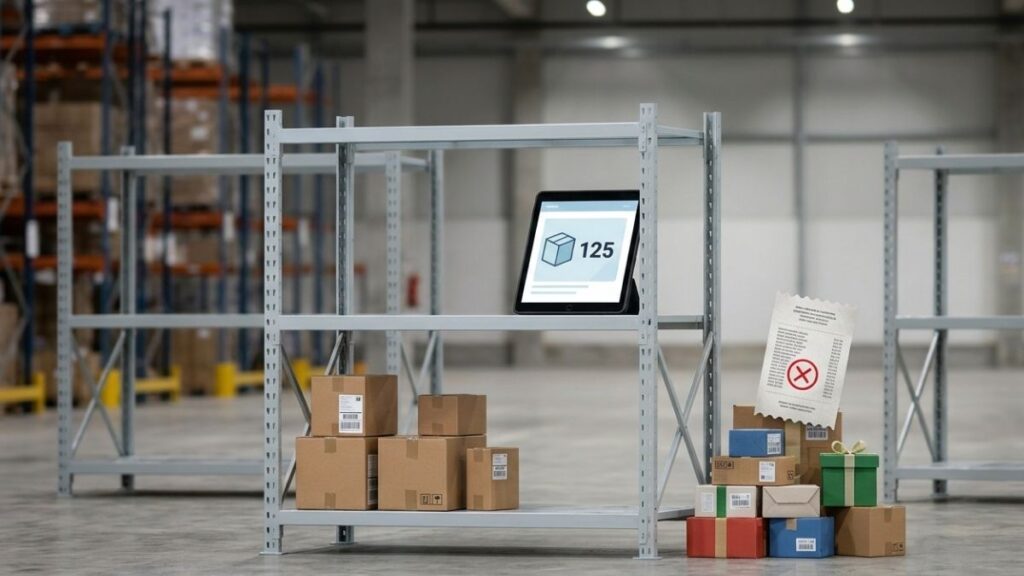
- Overselling Across Channels: Without multi-channel inventory management, Shopify and Amazon can both sell the same last 50 units.
- Phantom Stock: Your system says 400 units, and the shelf holds 310, thanks to damage, unrecorded transfers, and uncounted returns.
- Reordering On Instinct: Copying last year’s order ignores new promotions, lead times, and channels. Inventory forecasting software fixes this.
- Returns That Never Get Restocked: The National Retail Federation reports that retailers expect 17% of holiday sales to come back. Late processing makes available quantities drift all December.
- Wrong Costs Feeding Your Margins: If landed costs (supplier price plus freight, duty, and insurance) and COGS (cost of goods sold) are stale, your discount math is stale too.
Preparing for Black Friday with the right inventory management system closes most of these gaps before the first order lands.
What to Look For in a Peak-Ready Inventory Management System
A peak-ready system has to do five jobs well while orders pour in. Use this checklist to review your setup or compare inventory management software.

- Real-Time Inventory Tracking. Every sale, transfer, and receipt updates available stock within seconds across warehouses, stores, and 3PLs (third-party logistics providers).
- Multi-Channel Inventory Management: One stock pool feeds every channel, with buffers so one channel cannot drain everything.
- Inventory Forecasting Software: Forecasts built on sales history, seasonality, and supplier lead times keep each SKU (stock-keeping unit) stocked for the season ahead.
- Automated Inventory Management. Reorder triggers, draft purchase orders, bundle calculations, and low-stock alerts run without anyone watching a spreadsheet at midnight.
- A Clean Link to Accounting: Sales, COGS, and stock values flow into Xero or QuickBooks Online automatically, so finance and operations read the same numbers.
If your inventory management system misses two or more of these, start there. Preparing for Black Friday with the right inventory management system usually means closing those gaps first. Our comparison of Xero vs QuickBooks for inventory-heavy teams explains why accounting software alone rarely covers them.
Where Shopify Inventory Management Fits and When You Outgrow It
Shopify’s built-in tools are a sensible first stop when preparing your inventory systems for peak season. The strain starts when you add marketplaces, warehouses, and wholesale customers.
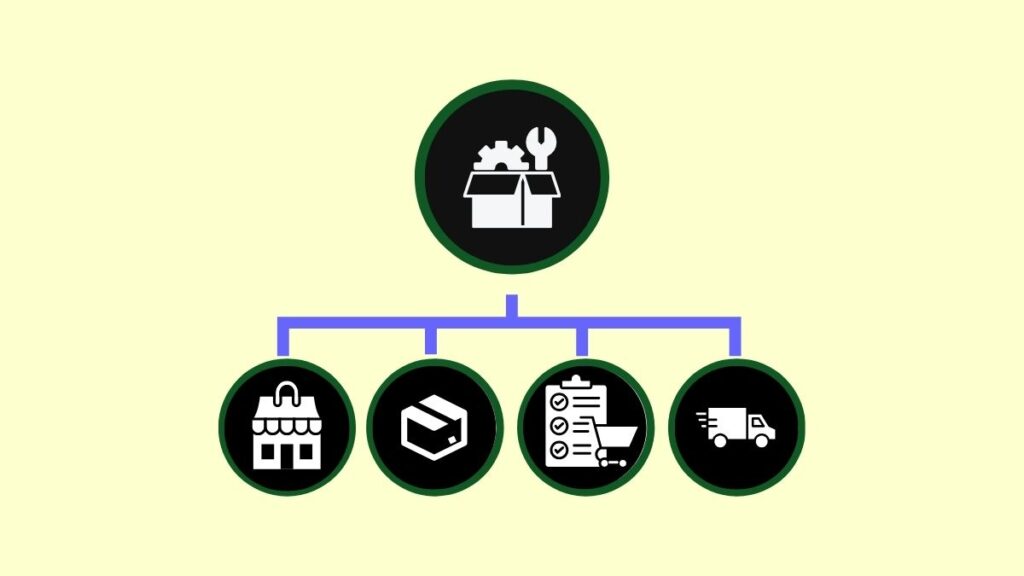
Shopify inventory management tracks quantities by location. Check the Continue selling when out of stock setting before November. Shopify explains that it lets customers keep buying a tracked item at zero or below, which suits pre-orders and hurts badly if someone switched it on months ago and forgot. Checking it is a quick first step in Black Friday prepration.
Once Amazon, a B2B portal, or a 3PL joins in, Shopify becomes one of several channels pulling from the same stock. At that stage, Black Friday preparation with the right inventory management system means a central platform above your channels, with Shopify inventory management syncing into it.
How Cin7 Core Gets Your Inventory System Black Friday Ready
Cin7 Core is the platform our team uses every day, and it covers most of the checklist above.
Cin7 lists more than 700 integrations that sync stock across Shopify, Amazon, POS, and warehouses. Its Shopify integration sends every Shopify order into Cin7 in real time and updates stock in both directions. For demand planning, Cin7 offers ForesightAI, an AI forecasting module that may sit outside your base plan, so confirm inclusions with Cin7. Cin7 Core also syncs with Xero and QuickBooks Online.

Setup decides how Cin7 performs on Black Friday: SKU structures, bundle rules, channel buffers, landed cost settings, and the accounting mappings that send COGS to the right accounts. When a US baking ingredients provider hit Amazon and Cin7 Core integration issues across its US and Canada stores, correcting that setup was the fix, as our Amazon Cin7 Core integration case study shows.
How to Calculate Reorder Points and Safety Stock for Black Friday
Reorder math is where peak-season planning gets practical. Two formulas do most of the heavy lifting, and good inventory forecasting software runs them for every SKU automatically.

Reorder Point = (average daily sales x supplier lead time in days) + safety stock
Safety Stock = (maximum daily sales x maximum lead time) – (average daily sales x average lead time)
Say your best-selling cookware set averages 40 units a day in late November and peaks at 70 units on Black Friday. Your supplier usually delivers in 10 days and occasionally takes 14.
- Safety Stock = (70 x 14) – (40 x 10) = 980 – 400 = 580 units
- Reorder Point = (40 x 10) + 580 = 980 units
When available stock drops to 980 units, the next purchase order goes out. Set this as an automated inventory management rule, and it fires on time during peak week. Treat these as widely used rules of thumb and adjust for your margins and supplier reliability. Getting these numbers right per SKU is the most measurable part of black friday preparation with the right inventory management system.
Your 30-Day Countdown to November 27
Thirty days is enough to tighten an existing setup. Preparing for Black Friday with the right inventory management system feels far calmer when the work is split into weekly goals.

- Week 1: Count and reconcile. Cycle count your top 50 SKUs and reconcile stock on hand against your balance sheet.
- Week 2: Clean the data. Update landed costs, retire dead SKUs, and review that Shopify oversell setting.
- Week 3: Set the rules. Lock reorder points, set channel buffers, and confirm December supplier lead times.
- Week 4: Test under load. Run test orders, a return, and an exchange on every channel, and confirm each reaches accounting.
- Black Friday week: Watch the exceptions. Review sync errors daily and pause promotions on any SKU below its buffer.
The January Test: Did Black Friday Actually Make You Money?
Revenue is visible on the day. Profit only becomes clear when the books close.
By mid-January, you should be able to answer three questions in under an hour. Which products made money after discounts and fees? Which channels were profitable? How much cash sits in leftover stock? If that takes three weeks of spreadsheets, your systems are telling you something.

Leftover stock carries an accounting question as well. Under the US GAAP rules in ASU 2015-11, inventory measured using FIFO or average cost must be carried at the lower of cost and net realizable value, and any shortfall is recognized as a loss in that period. If heavy discounting pushed a product’s expected selling price below its cost, that write-down belongs in your books. Building that risk into your reorder quantities is part of black friday prepration with the right inventory management system. The IRS also notes the calendar year is the most common tax year, so for many US businesses, a year-end stock count lands just weeks after peak.
This is where automated inventory management and accounting meet, and it is the clearest test of whether preparing for Black Friday with the right inventory management system paid off. Our inventory accounting and e-commerce accounting teams handle exactly this reconciliation.
Final Thoughts
Preparing for Black Friday with the right inventory management system comes down to trust. When stock numbers, channel data, and accounting agree, you can push promotions harder, reorder with confidence, and close January without surprises.
At VNC, our goal is to become the most trusted accounting, inventory, analysis, automation, advisory, and AI finance partner for product businesses with USD 5 million to USD 100 million in revenue across Australia, NZ, the USA, the UK, and Switzerland.
Want to see exactly where you stand on your Black Friday preparation before November 27? Take our free Holiday Readiness Scorecard, a 15-minute self-assessment for product businesses with tips from the Best Cin7 Core Experts. You will get your readiness score, a breakdown by area, and your top priorities. Want expert eyes on your results? Book a free 30-minute call with our bookkeeping and inventory experts.
Frequently Asked Questions
Preparing for Black Friday with the right inventory management system means your stock data is accurate, synced across every channel, and connected to accounting before peak demand. It covers cycle counts, updated costs, reorder points, channel buffers, and order testing.
Start preparing for Black Friday with the right inventory management system at least 30 days before November 27, 2026. If you plan to implement new inventory management software, start in late summer, since changing systems during peak season adds risk.
For a single Shopify store with one warehouse, it can be. Once you also sell on Amazon, wholesale, or across several locations, preparing for Black Friday with the right inventory management system means adding a central platform such as Cin7 Core.
Cin7 keeps one stock pool and syncs available quantities to channels like Shopify and Amazon, so a sale on one updates the others. Setting channel buffers and sync rules is a core part of preparing for Black Friday with the right inventory management system.
Use safety stock = (maximum daily sales x maximum lead time) minus (average daily sales x average lead time). For a SKU selling 40 a day on average, 70 at peak, with 10 to 14 day lead times, that is 580 units. Setting it per SKU is a core step in preparing for Black Friday with the right inventory management system.
It is rarely wise within six weeks of peak. The safer approach to preparing for Black Friday with the right inventory management system is to fix data and rules in your current setup now and plan any migration for January.
Reconcile stock on hand against the inventory value on your balance sheet, then reconcile channel payouts against recorded sales. If they disagree by more than a small tolerance, fixing that sync is your first step in preparing for Black Friday with the right inventory management system next year.