Know What to Buy and when to Order WithFreeSKU Planning Tool
Add your top products, what you sold last season and how long your suppliers take to deliver. Our free SKU planning tool shows how many units to buy and the last day to place each order, so your bestsellers stay in stock through Black Friday and the holidays.
Know What to Buy and when to Order WithFreeSKU Planning Tool
Our free SKU planning tool shows how many units to buy and the last day to place each order, so your bestsellers stay in stock through Black Friday and the holidays.
Most holiday stock problems start weeks before customers begin buying, at the moment the orders are placed. Here are the 6 SKU planning mistakes we see most often.
Ordering by Category Totals
Category totals look healthy while specific sizes, colors and pack types sell out. SKU planning shows exactly which lines are short
Reusing Last Year’s Numbers
Your business has changed since last year. You may have new products, more customers or lines you have stopped selling, and your SKU forecast should reflect that.
Too Much Cash in Slow Sellers
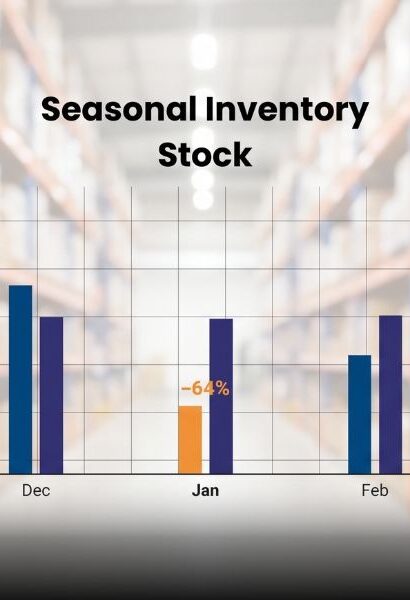
Buying too much of the wrong products leaves less money for the ones that sell. The extra stock often ends up discounted in January.
Stock on Hand Doesn’t Match the Shelf
SKU planning starts with your stock count. If your system shows more stock than you really have, you will order too little and run out sooner.
Supplier Lead Times Are Out of Date
Suppliers often take longer before the holidays. If you plan with last year’s delivery times, your stock may arrive too late.
Buying Without Checking Cash Flow
Large orders placed without a cash check can leave you short when bills are due. SKU planning helps you buy what you can afford.
Find out how many units each product needs and when to order. It’s free, and you can start your SKU planning right now.
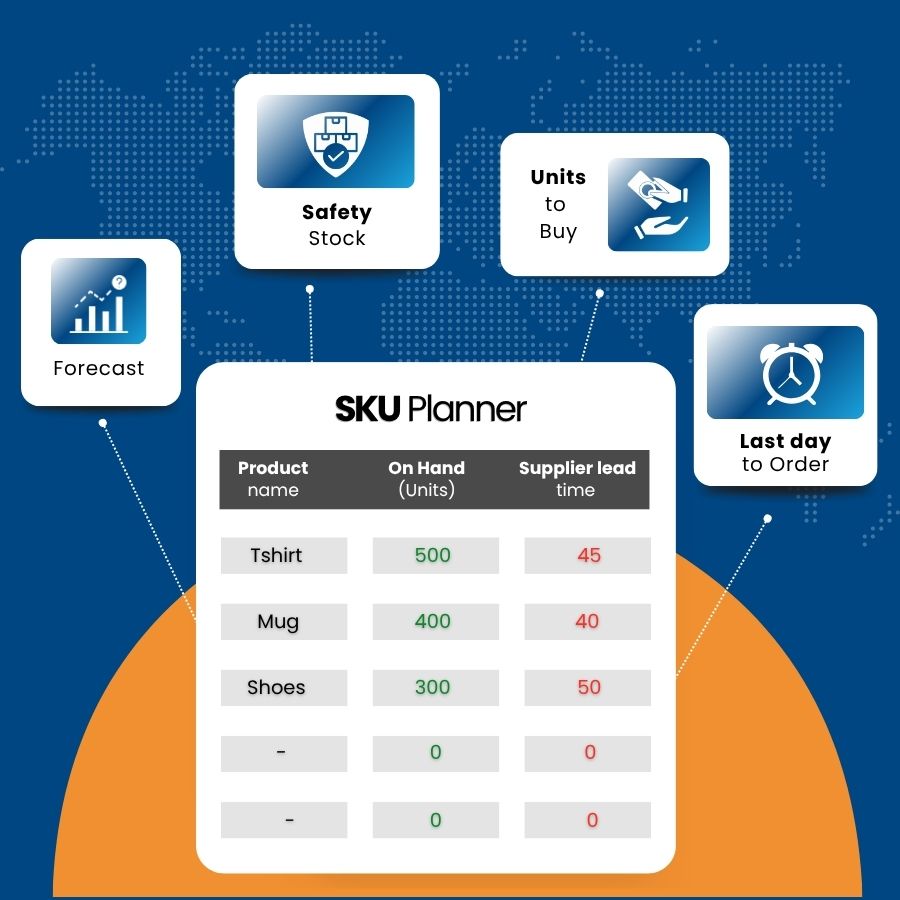
SKU planning means working out how many units of each product to buy and when to order them. It uses your expected sales, the stock you already have and your supplier lead times. It starts with SKU-level forecasting, which means predicting sales for each product separately, since products in the same range rarely sell at the same pace. This stock planning tool gives you 6 results for every SKU you enter.
How many units of each product you are likely to sell this season, based on past sales.
Units to Buy
How many units to order after counting the stock you have and the stock already on order.
Order-By Date
The last day to place each order so your stock arrives in time for Black Friday and the holiday rush.
Safety Stock
A small extra amount in your SKU planning to cover late deliveries or busier-than-expected sales.
Weeks of Cover
How many weeks your current stock will last at the rate you expect to sell this season.
Purchase Value
How much your order will cost, so you can check it against your budget before you buy.
Why Use IT
How a SKU Planner ProtectsYour Holiday Season
Most business owners want the same 3 things from holiday buying. They want their bestsellers in stock, cash left in the bank and orders placed on time. An inventory planner built around SKU planning helps with all three.
Bestsellers Stay in Stock
Units to buy are set per SKU, so your top lines get the depth they need for the busiest weeks.
Less Cash Tied Up
Buying stops at what each SKU needs, which keeps cash free for payroll, marketing and the new year.
Orders Go in on Time
Order-by dates turn supplier lead times into a clear purchasing calendar your whole team can follow.
You Walk Away With: A SKU forecast, units to buy and an order-by date for every product you enter, plus a PDF plan to share with your team, suppliers or accountant.
Our bookkeeping and inventory experts work with product businesses across the US, UK, Australia and beyond, with one aim: to be the most trusted finance partner for these businesses across accounting, inventory, analysis, automation, advisory and AI.
Save $499, Get this Planner for free! Enter last year’s Oct to Dec sales for your top products. The planner works out your forecast, safety stock, units to buy and the last day to place each order. Light blue fields are yours to edit.
SKU Buy Planner | VNC
Your buy plan is ready. The CSV file should start downloading now.
0Total units to buy
0Products to order now
–Earliest order-by date
SKU*
Product name
Units sold Oct–Dec last year*
Growth % (uses setting if blank)
Forecast units
Safety stock units
On hand now*
On order (open POs)*
Units to buy
Supplier lead time (days)*
Order by date
Status
Remove
* Required fields. How it works: Units to buy = Forecast units + Safety stock − On hand − On order. Order by date = Stock needed by date − Supplier lead time. Treat results as a planning guide and sense-check them against your own knowledge of demand.
VNC's inventory and accounting experts help product businesses set up reorder points, lead times and stock forecasting in Cin7, so peak season buying runs on numbers you trust.
Additional resources
More on SKU Planning for the Holidays
Helpful guides on SKU planning, protecting your margins and getting ready for the holiday rush.
SKU planning means deciding how many units of each product to buy and when to order them. It looks at expected sales, the stock you already have and supplier lead times, so each product gets its own order quantity and deadline.
How do I do SKU planning, step by step?
Choose your most important products, check your stock counts and lead times, forecast sales for each product, work out how many to buy, then set an order date for each one. The planner does the last three steps for you.
What is a SKU forecast?
A SKU forecast is how many units of one product you expect to sell over a set period. It usually starts with last year’s sales for the same period, adjusted for growth and changes such as new sales channels or promotions.
How is my score calculated?
Each answer scores 100, 50 or 0, and "Not sure" counts as 0. Your overall percentage is the average across all 25 answers, and each area gets its own score.
How is SKU-level forecasting different from category forecasting?
Category forecasting predicts sales for a whole group of products. SKU-level forecasting predicts sales for each product in that group. This matters because one size or color can sell out even when the category as a whole looks well stocked.
How do I calculate how much stock to buy?
Take your SKU forecast and add some safety stock. Then subtract the stock you have and the stock already on order. If the answer is zero or less, you have enough.
How is the order-by date calculated?
Start with the date you need the stock ready to sell. Subtract your supplier’s lead time and a few days to receive it. For example, if you need stock by November 10 and delivery takes 45 days plus 7 days to receive, order by September 19.
How much safety stock should I hold?
In SKU planning, it depends on how much your sales and delivery times change from week to week. A simple approach is to keep a set number of days of average sales as a buffer. Products with less predictable sales need a bigger buffer.
What’s the difference between a reorder point and an order-by date?
+
A reorder point is a stock level that tells you to reorder during normal trading. An order-by date is a deadline for a one-off seasonal order. Most SKU planning uses both, with reorder points for everyday stock and order-by dates for peak season.
What if I’ve missed my order-by date?
You still have options. Ask your supplier about faster shipping or sending part of the order early. You can also buy your top products from a local supplier or plan promotions around the stock you will have. Faster shipping costs more, so check your margins first.
Which SKUs should I plan first?
Start with the products that bring in the most revenue or profit. Running out of these costs you the most, so they should come first in your SKU planning.
When is a free inventory planner enough, and when do I need an inventory system?
A free inventory planner works well for planning one season across your main products. As you add more products, locations and sales channels, many businesses move their SKU planning into an inventory system such as Cin7 Core.
Is the SKU Planner free?
Yes, completely free and with no obligation. We only use your details to follow up on your plan.
When should I start holiday SKU planning?
Start as early as your longest supplier lead time needs. If you import stock, you may need to order months before the holidays.